
Experience is useful. But it is not the starting point.
I had learned coaching. I was not yet convinced by it.
My decision to become a coach began in Hong Kong.
I was CEO of Sympatex Technologies Asia Limited. My family lived in Oberbiberg, a small village south of Munich, and I shuttled between Hong Kong and Germany roughly every three weeks.
It was not a way of life I wanted to continue indefinitely.
I had to make two decisions: where we would live, and what I would do next.
The first question was answered rather quickly.
When I asked my family whether they would move to Hong Kong, my wife said no. My son was equally clear. He had already attended an Italian school near Lake Garda and a German school near Düsseldorf. The prospect of another school, this time in Chinese or English, was not a change he welcomed.
We would live in Germany.
That left the more difficult question.
What would I do there?
I asked my wife a simple question: “What do you think I do best?”
Her answer surprised me. “You learn very quickly. And when you explain a concept, people listen to you attentively.”
I had spent many years in management and had always enjoyed helping younger people develop into managers. The Düsseldorf authorities had also authorised me to conduct management-development programmes.
For some time, I had been considering coaching. So I asked her what she thought.
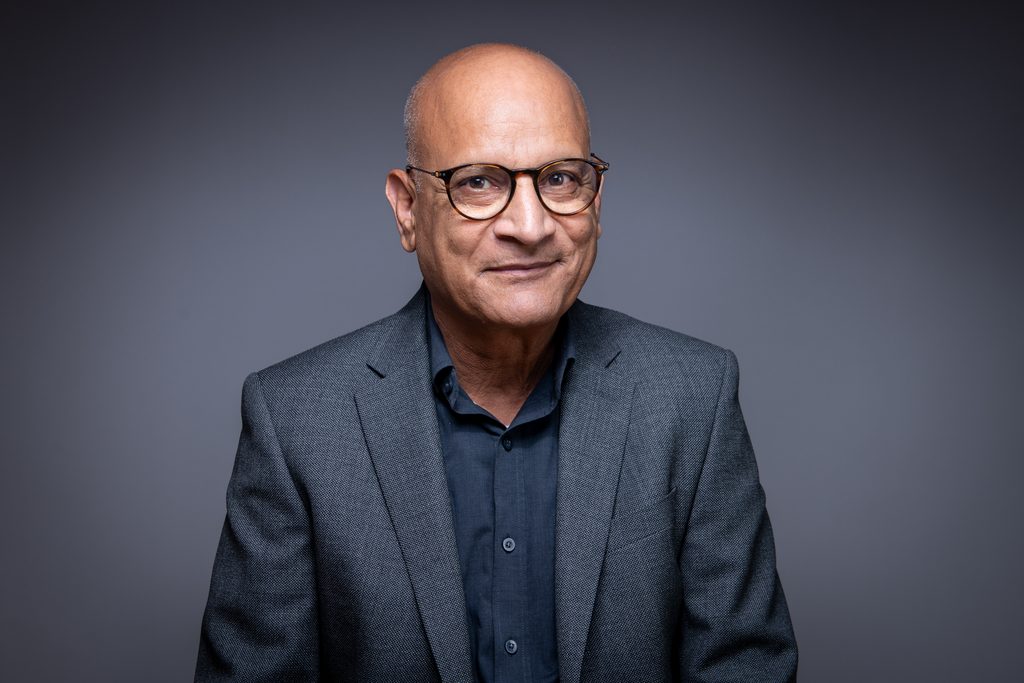
Her response was partly serious and partly amused. She described me as a 55-year-old gentleman from India, associated perhaps with some ancient wisdom, experienced, and multilingual. She thought coaching ought to be an easy sell.
I was less convinced about the “easy sell.” But the idea made sense, so I began to learn coaching..
Her answer stayed with me. I had already spent years mentoring younger managers, but I did not want to turn management experience into advice and call it coaching.
I therefore chose to study psychology—not to become a psychologist, but to understand the boundaries. That study changed how I understood coaching. I began to see that its purpose was not to provide another person with answers, but to help them examine how they were looking at the situation before them.
The answer is not mine to give.
Studying psychology led me to metacognition — thinking about our own thinking. The idea was not new. Socratic dialogue had used questions to expose assumptions long before psychology gave the process a name. Similar traditions of inquiry appear in Indian thought.
That changed the nature of the conversation for me. If someone comes to me with a difficult decision, my task is not to decide what that person should do. It is to help make visible what may be hidden by habit, assumption, experience, or the pressure of the situation.
The work is to see more clearly.
In practice, this means slowing down the apparent problem long enough to examine it. What do we know? What are we assuming? Which part of the situation can be influenced, and which part must simply be accepted?
Sometimes the difficulty changes merely because the question changes. What first appeared to be a problem with another person may turn out to be a question of responsibility, expectation, or a postponed decision.
I do not know in advance where such a conversation will lead. Nor should I. The value lies in making the situation sufficiently clear for the person responsible to decide how to act.